Leica Q3 - my Hype vs Reality TEST
The hire
Matt clocked that you can take a Leica Q3 for a test drive from the store in Mayfair. We had both been eyeing this camera up for a while, watching YouTube videos, absorbing the hype about how sharp the glass is, how good the files are and how solid the camera feels.
So we booked in, hired the 28 and the 43, and swapped between them throughout the day so we could both try each focal length.
Walking into that store made me feel like a kid walking into Hamleys for the first time. Just being in awe of being surrounded by these wonderful cameras that have a bit of brutalist charm about them.
The process was dead simple. Book online, share a proof of address and be prepared to put down a ~ £3,000 deposit on a credit card… which made me commit to wrapping the strap around my wrist in a way that would require a mugger to amputate my arm before they could take it off me.
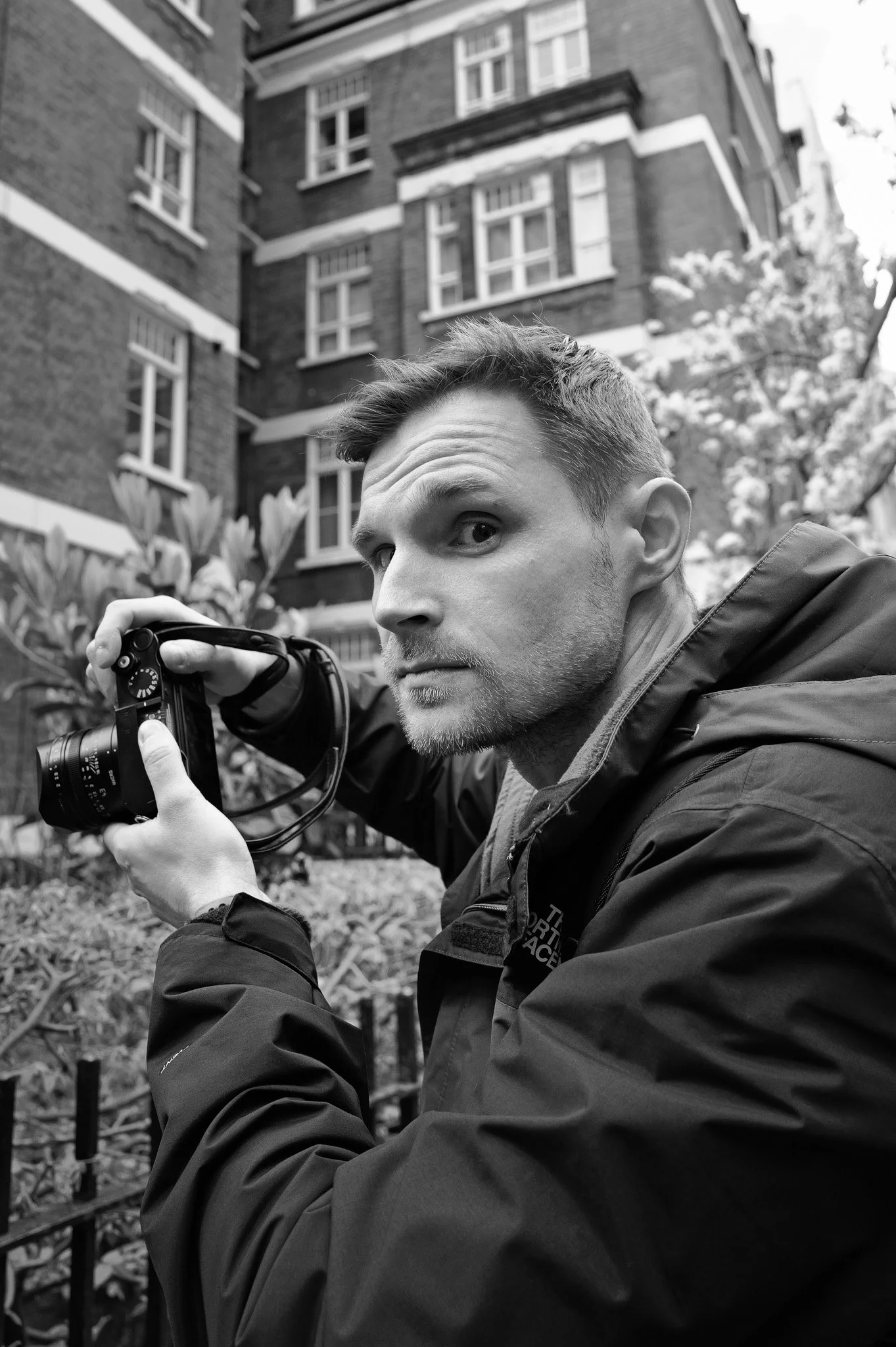
Say hi to Matt | Leica Q3 28mm, F.56, 1/250 sec, ISO 400
First impressions
When they brought the cameras out, the first thing I noticed was the feel and weight. Not heavy exactly, but it has a heft to it. It felt like a tank, but a well-balanced one. The buttons have a satisfying level of resistance, everything feels intentional.
It's a beautiful piece of industrial design. And it does make my Fuji X-T5 feel a bit toy-like in comparison (as everyone else keeps saying).
But then I started shooting, and the honeymoon stalled just a bit for this Porsche of the camera world.
We took the cameras and did a couple of laps of Oxford Street to start. On my X-T5 I've got dials along the top for ISO, shutter speed and exposure compensation, plus a wheel on the front and back, and I've got the function buttons mapped how I like them.
Picking up the Q3, I was immediately reaching for controls that weren't there (though it does have one wheel dial). I could control aperture from the lens ring, but mapping everything else felt slow. I ended up shooting in semi-auto for most of the day, either aperture or shutter priority, as it felt just too fiddly to shoot full manual.
After about 30 minutes though, the camera just disappeared. I stopped thinking about the controls and started thinking about the shots. An early opportunity was a gang of pigeons congregating on a side street. That first blurry shot due to low shutter speed got me to stop, slowdown and figure out a setup for the walk.
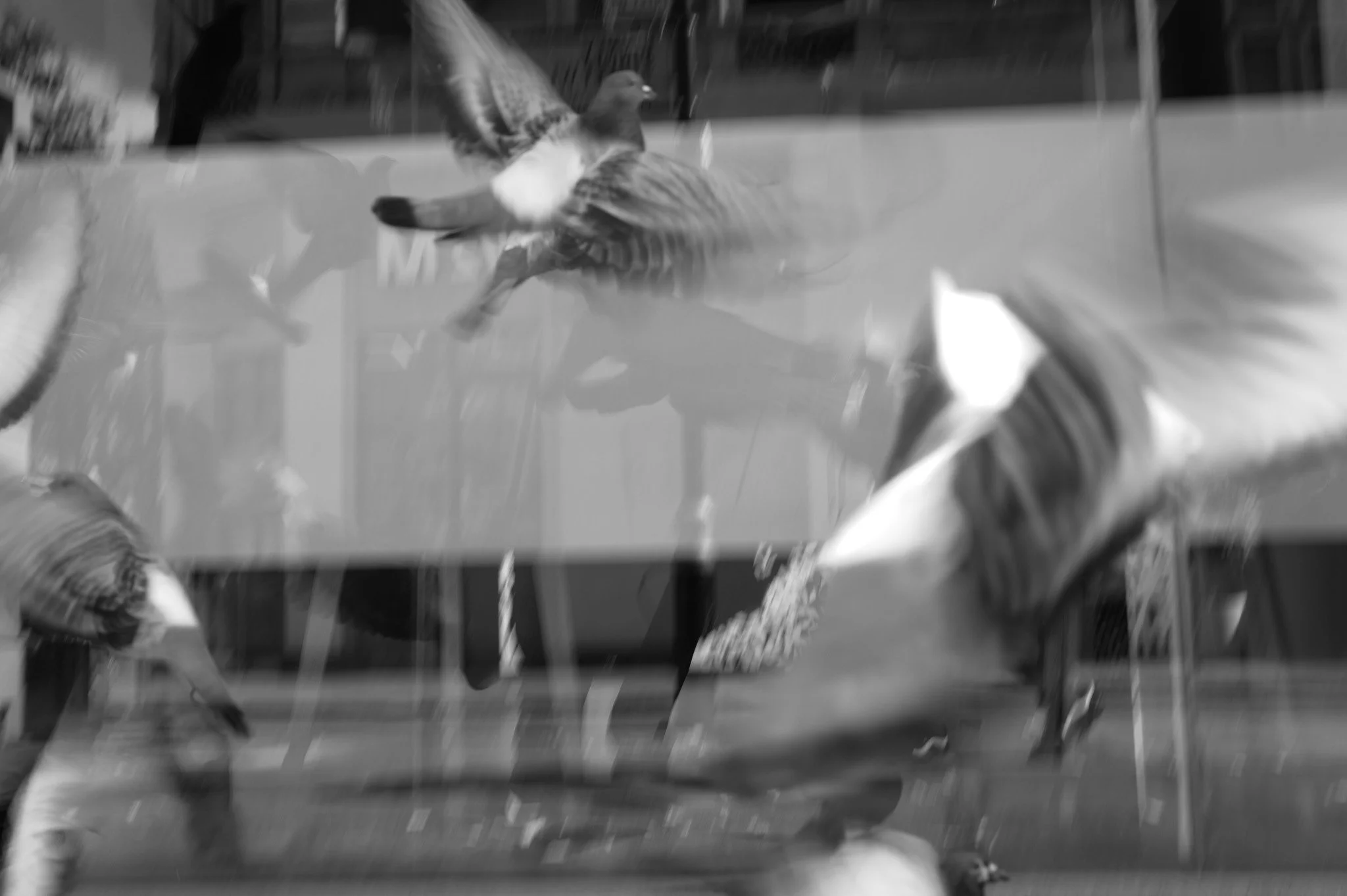
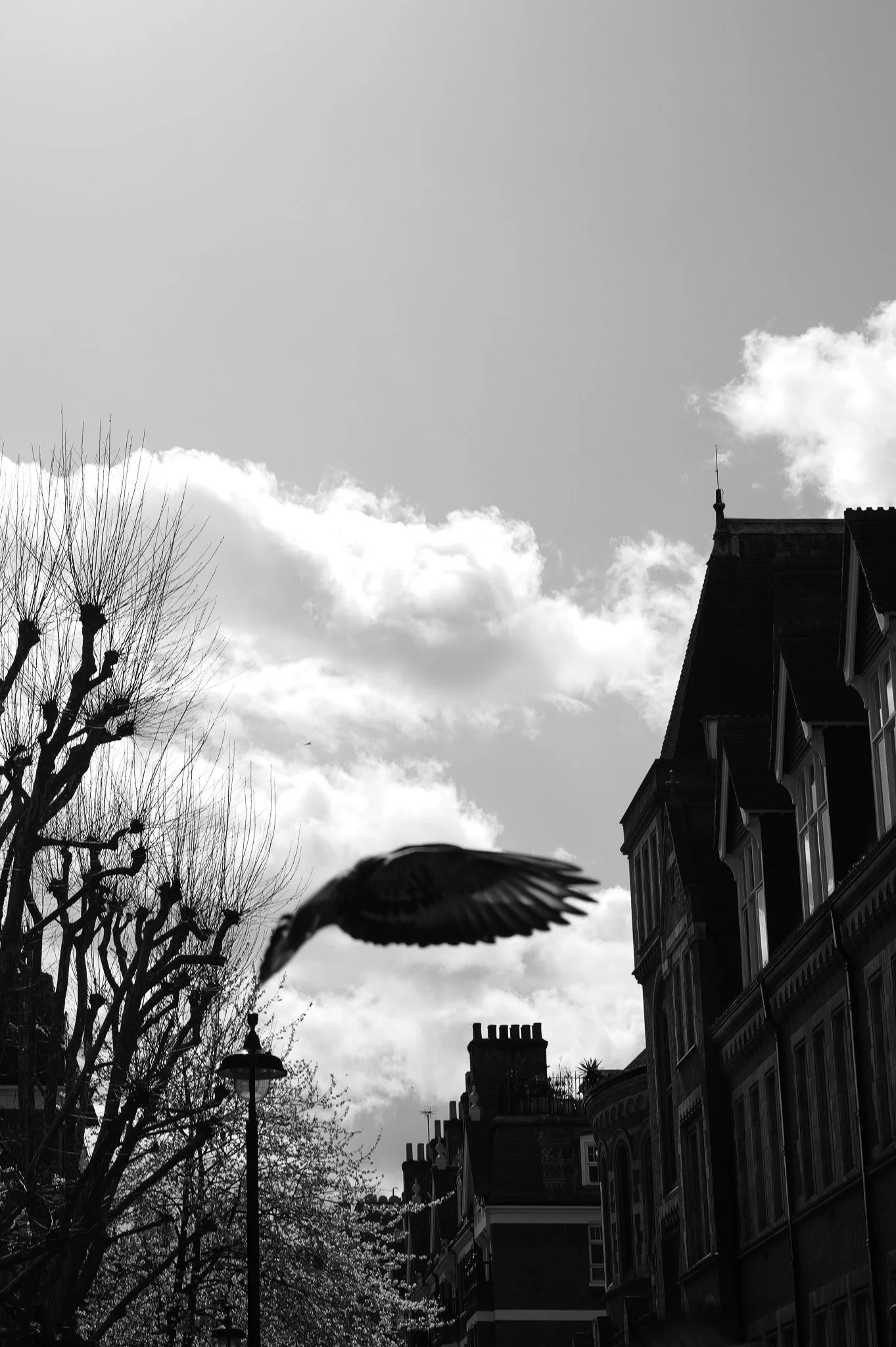
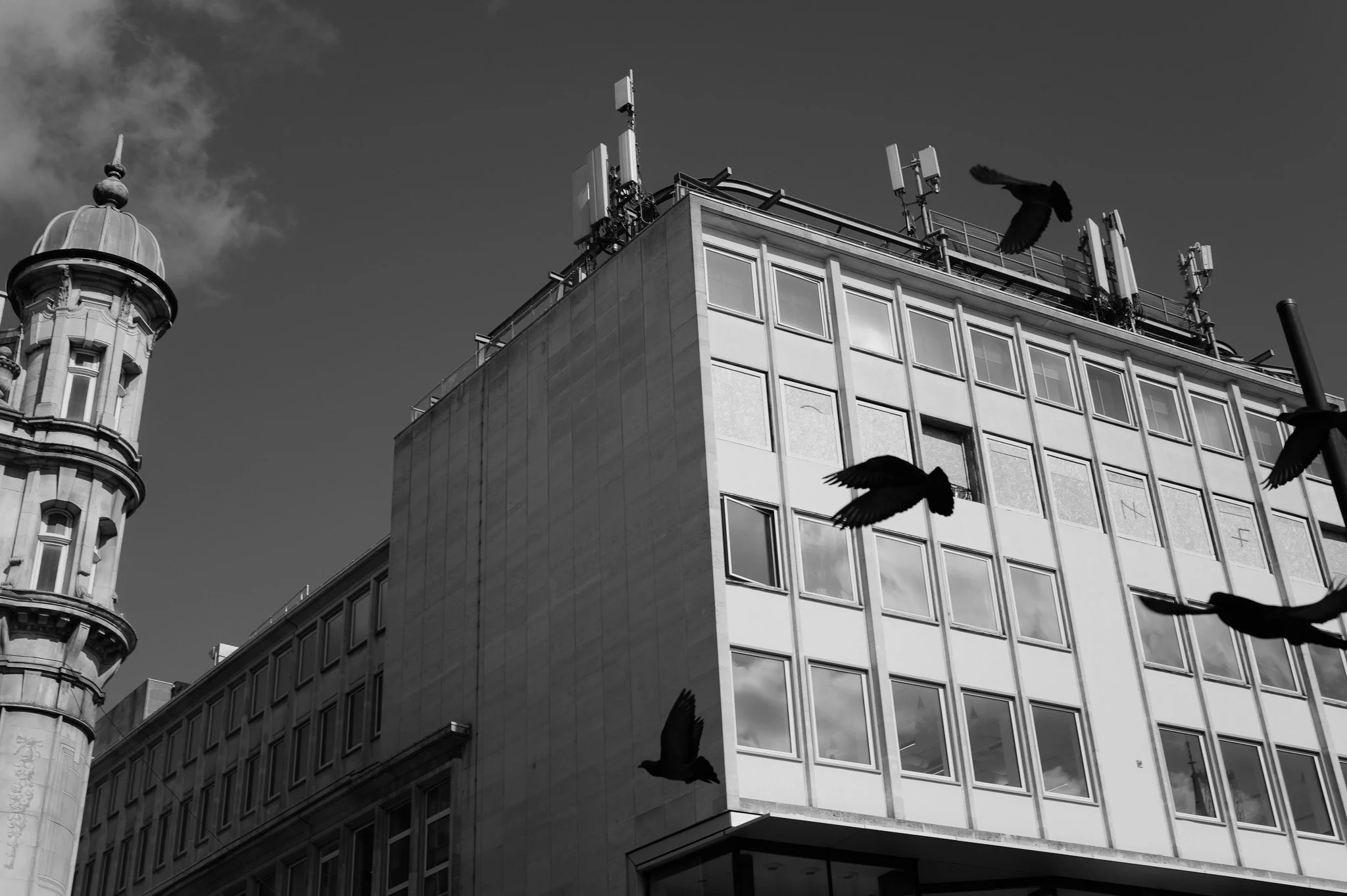
One thing that did surprise me once I got through my slow shutter speed faux pas was actually how decent the auto focus was. I'd read it was a bit rubbish compared to other systems but honestly it was fine. Maybe one or two missed shots across the whole day.
The march
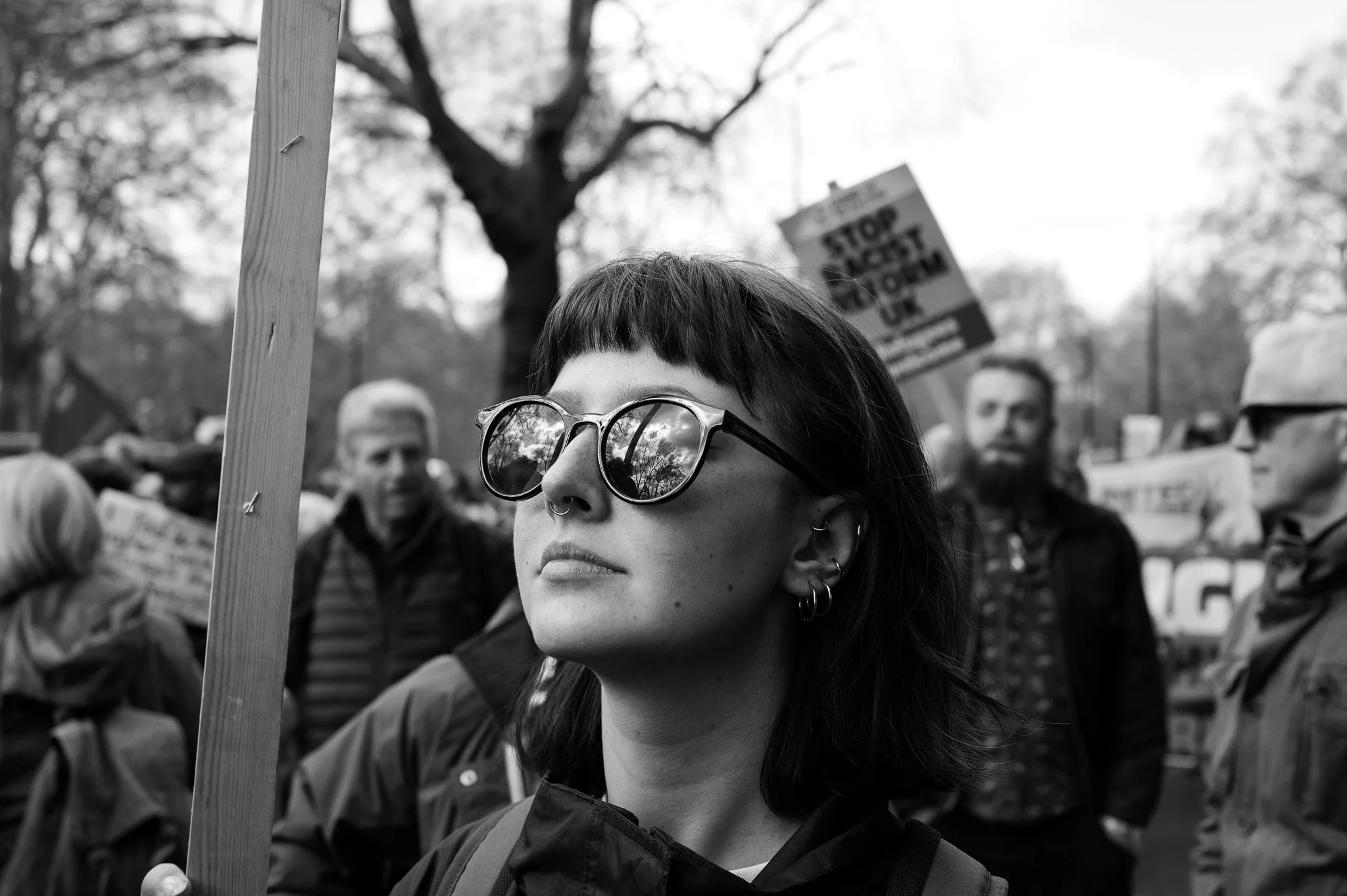
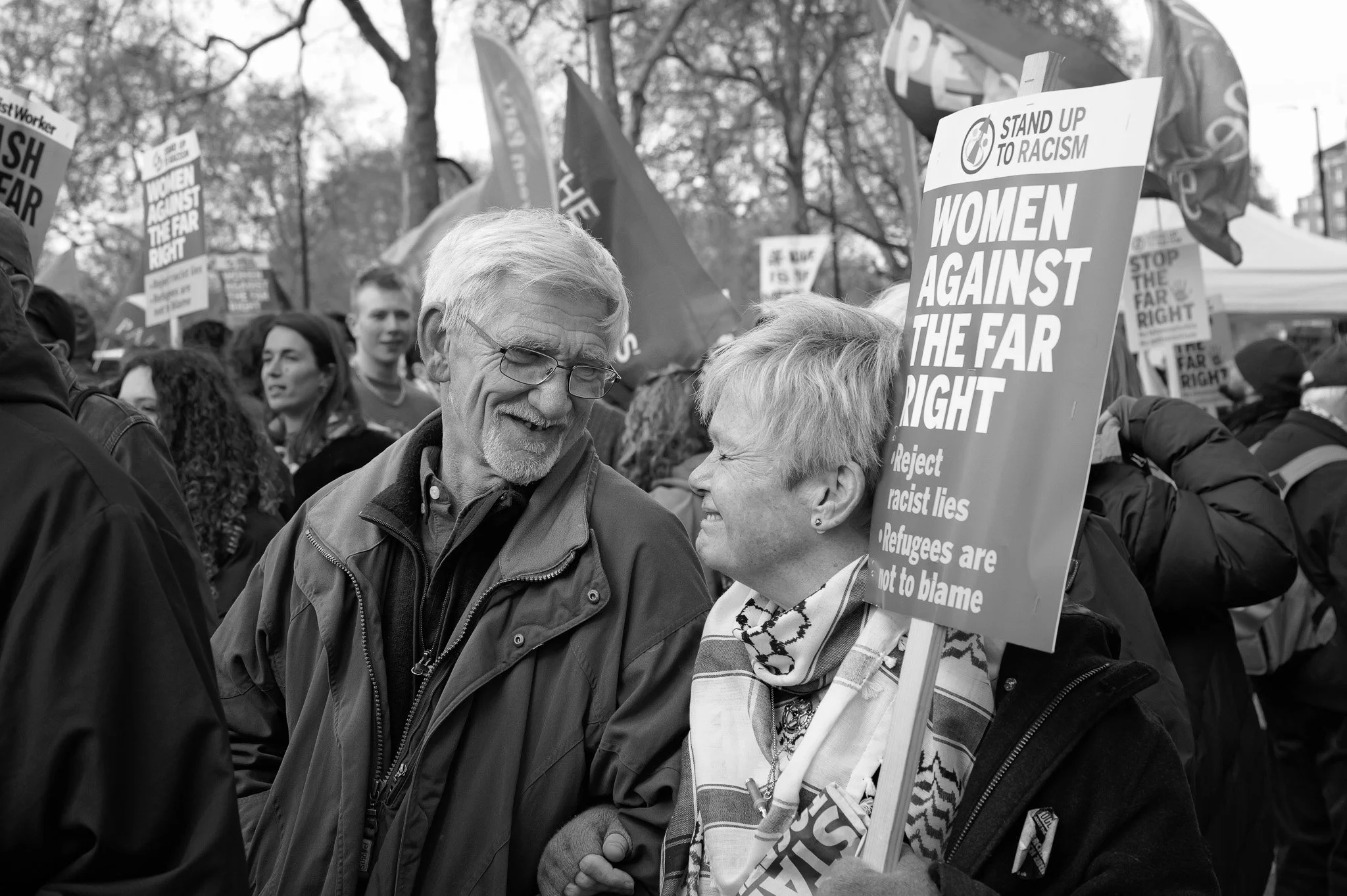
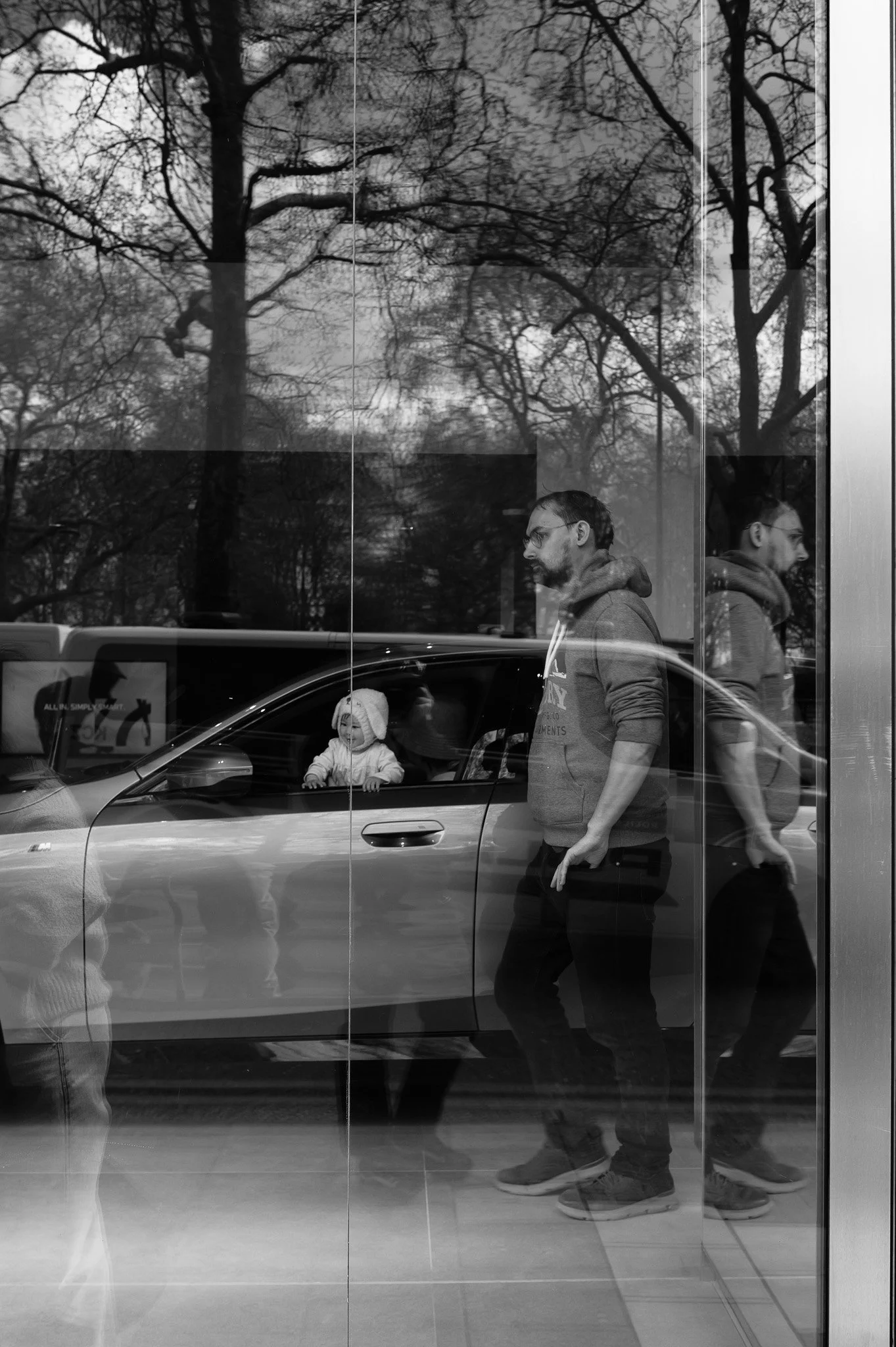
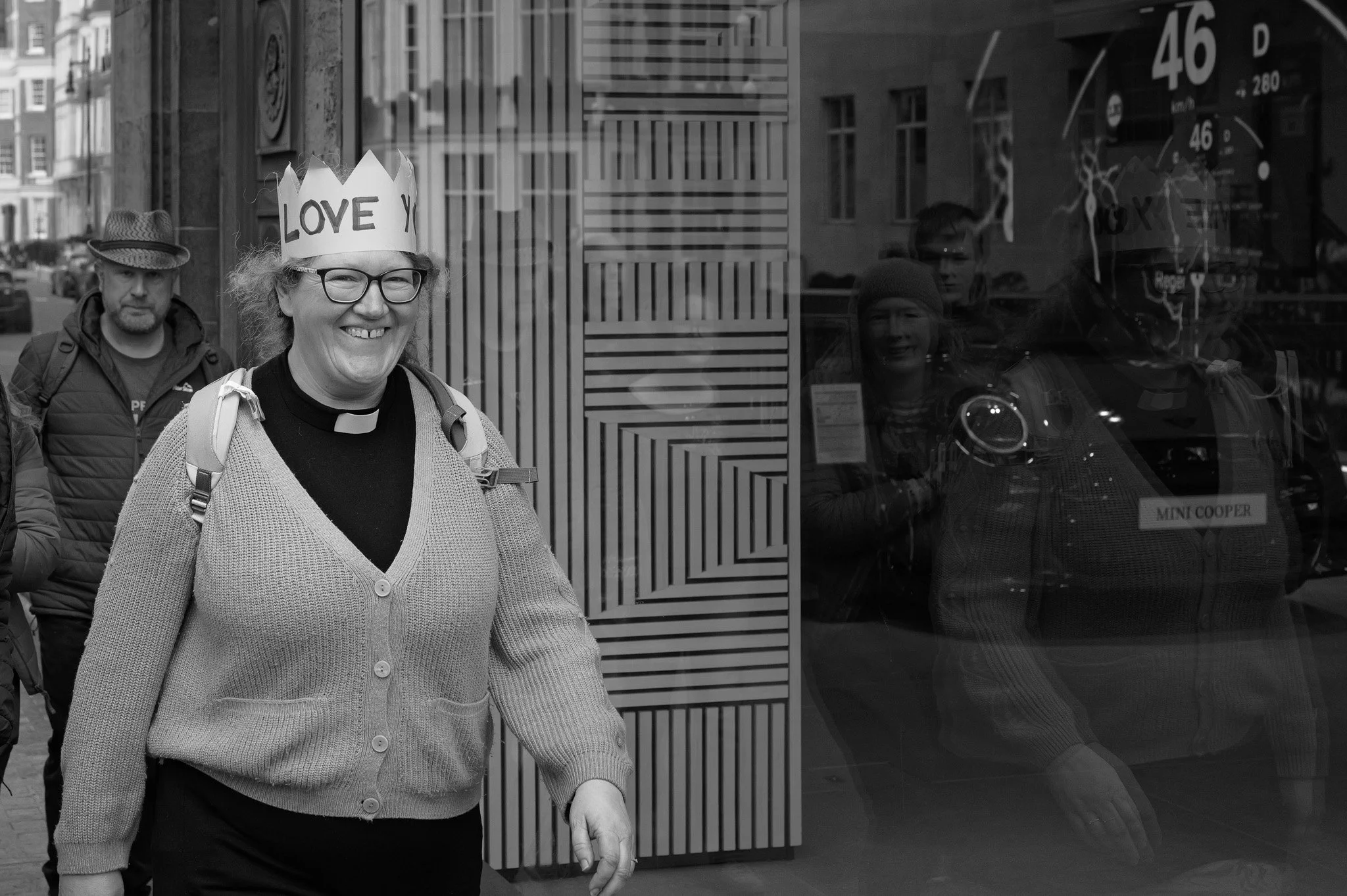
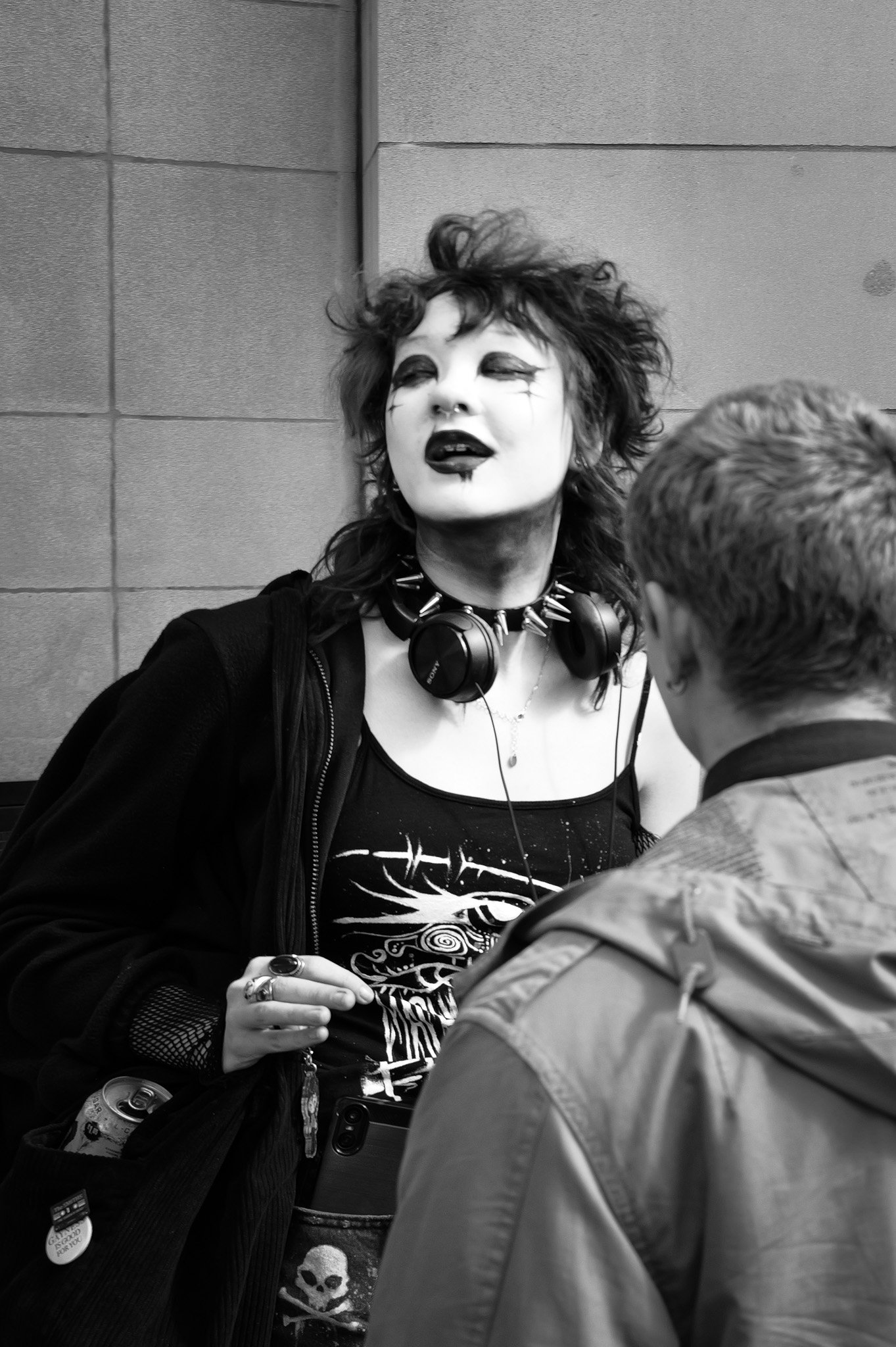
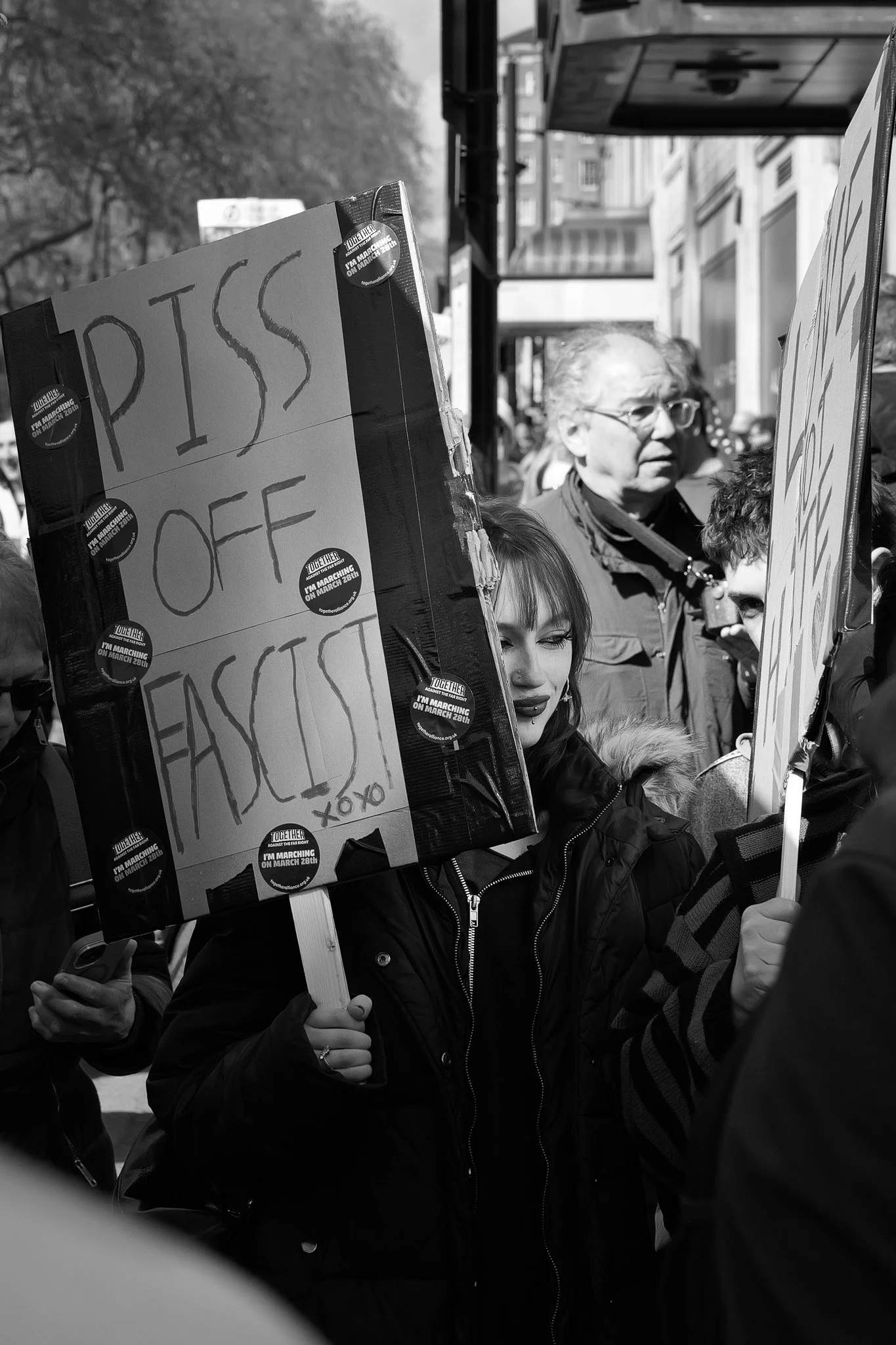
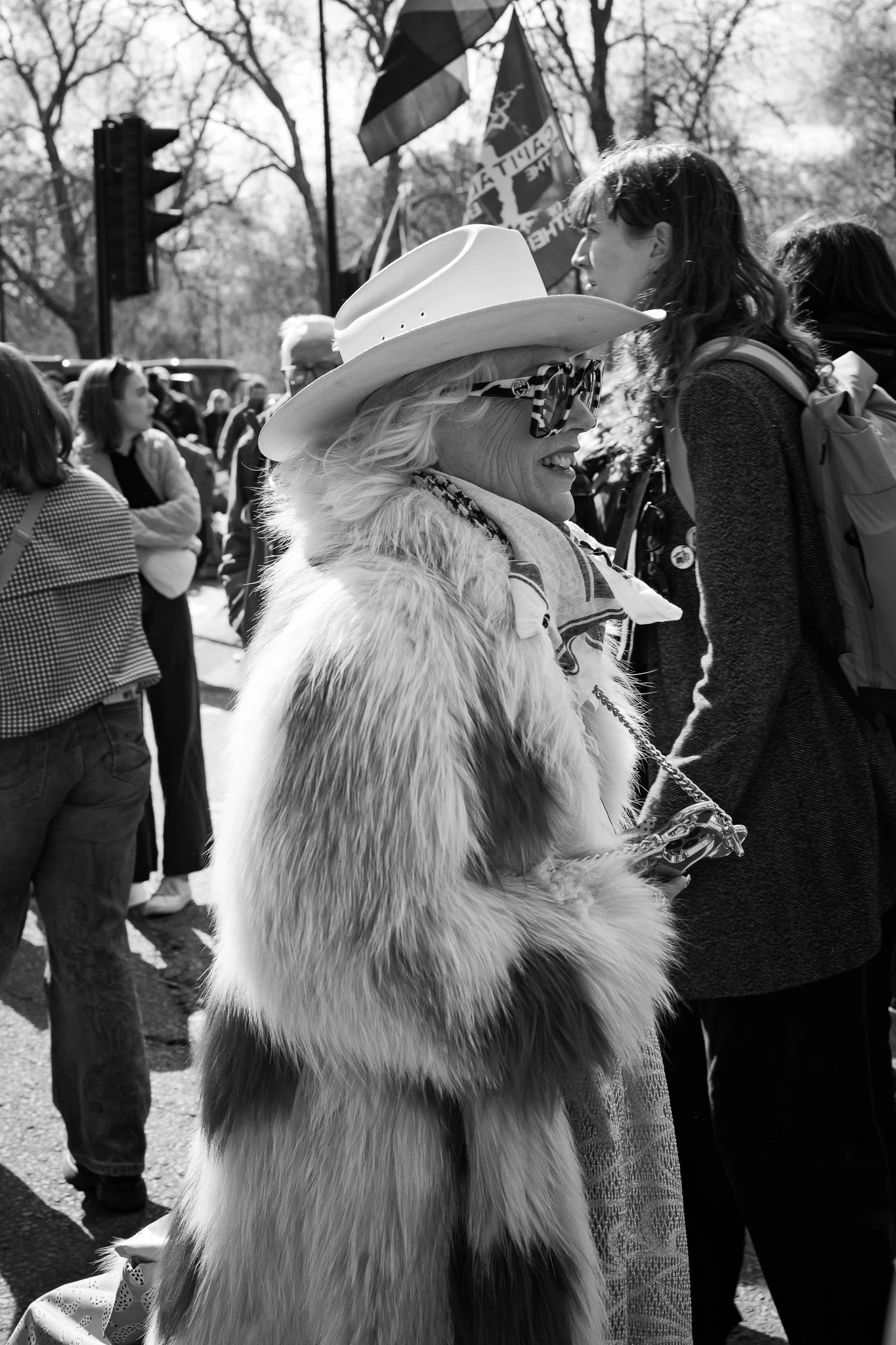
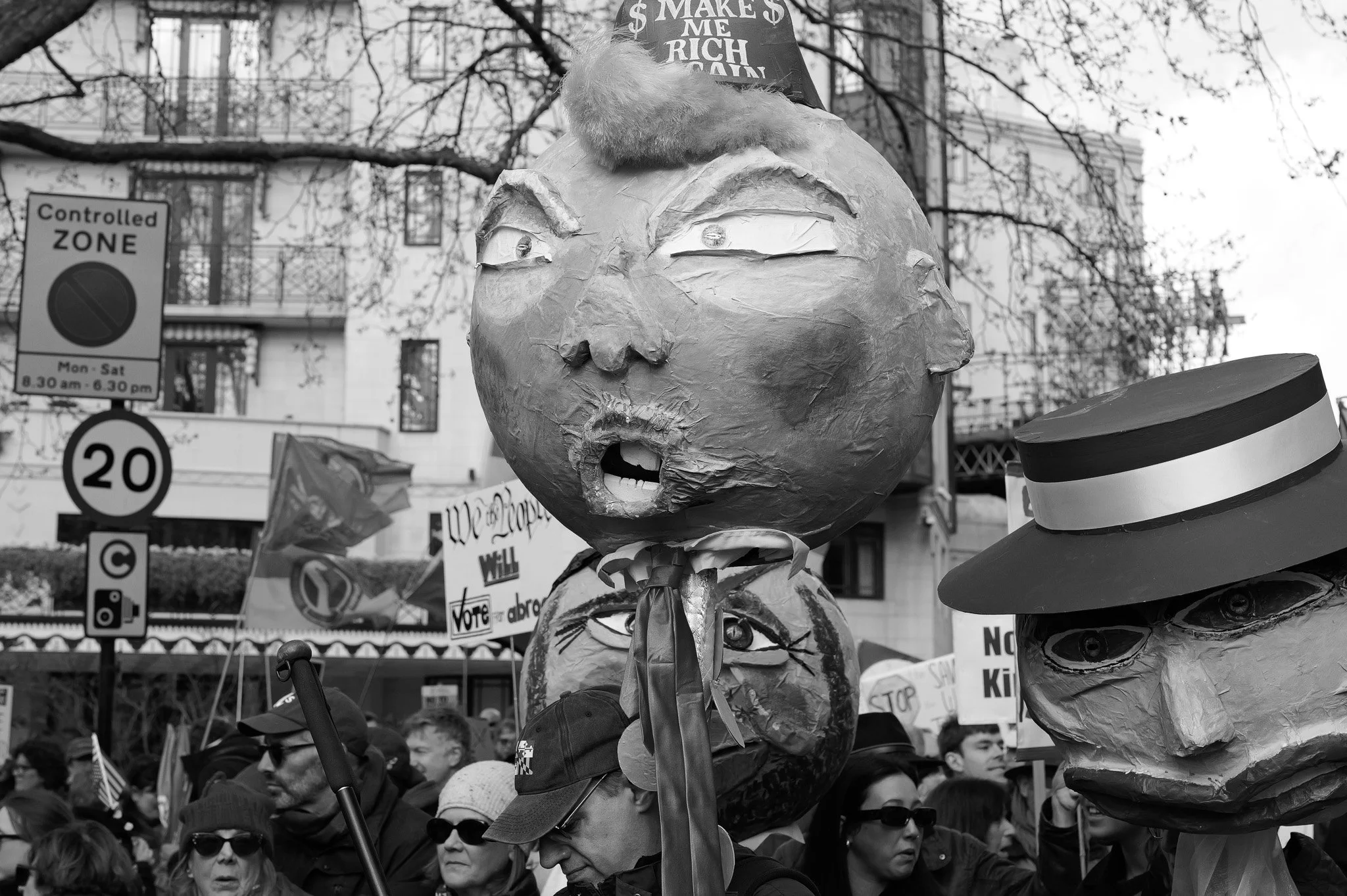
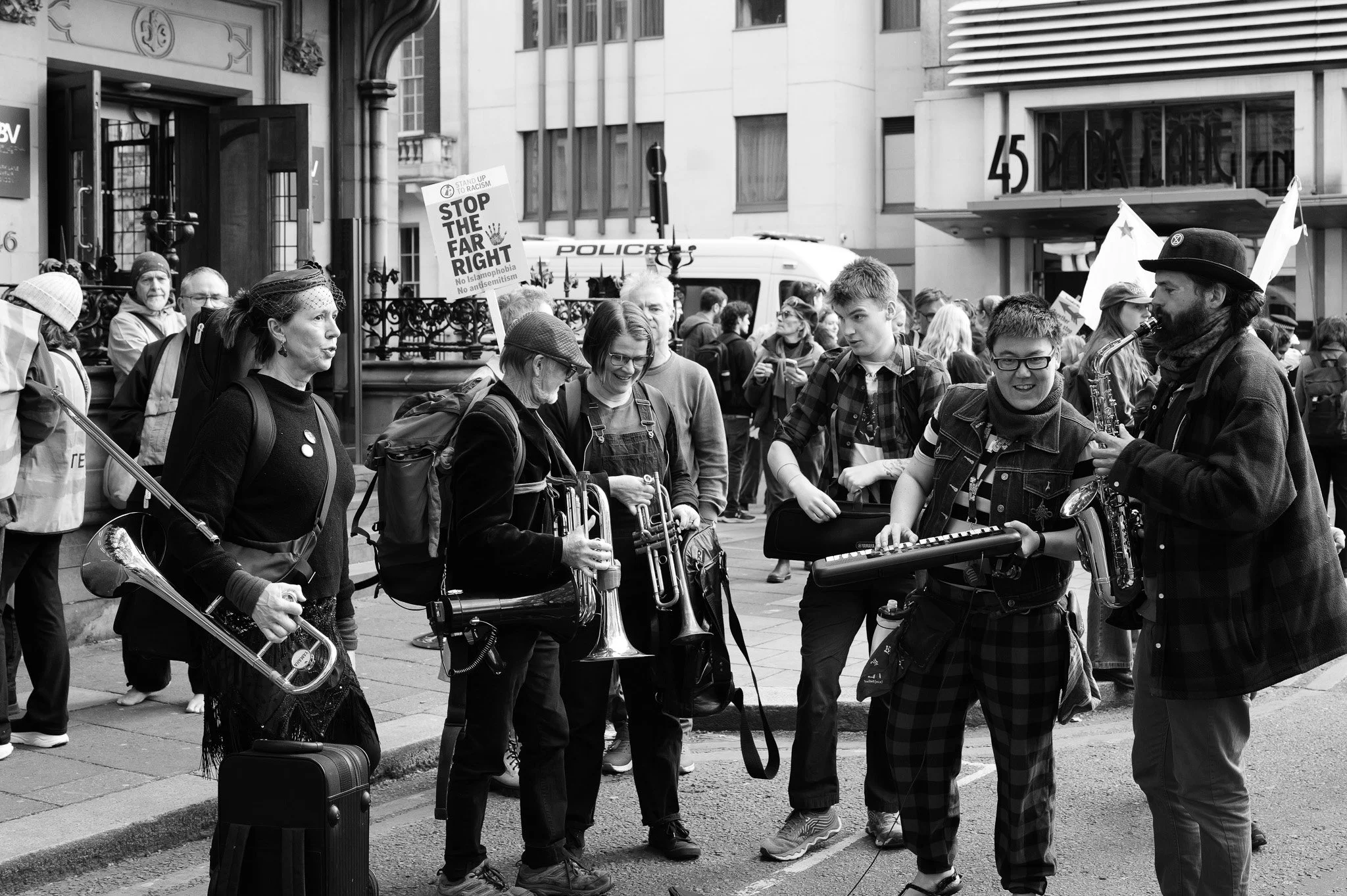
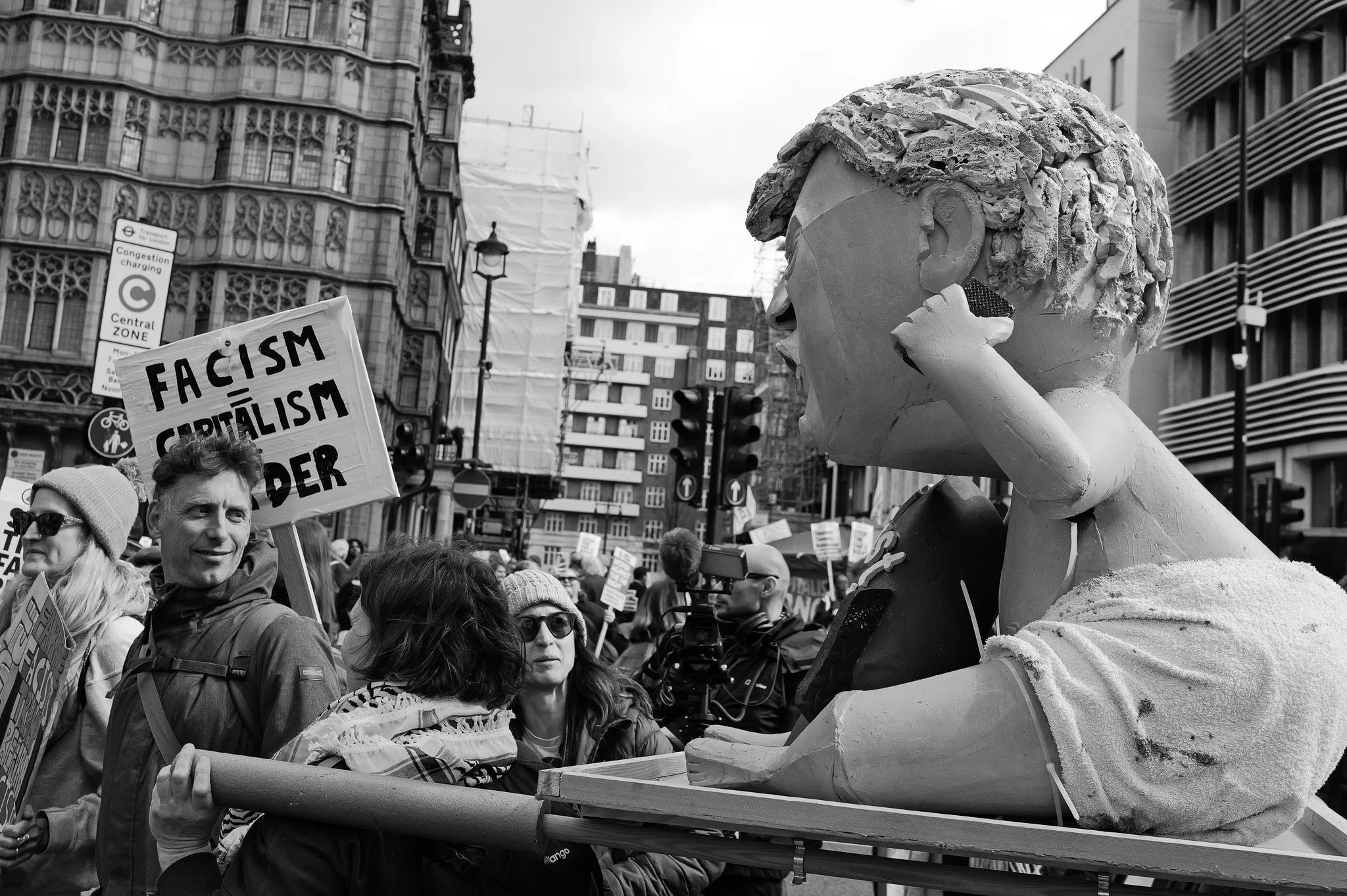
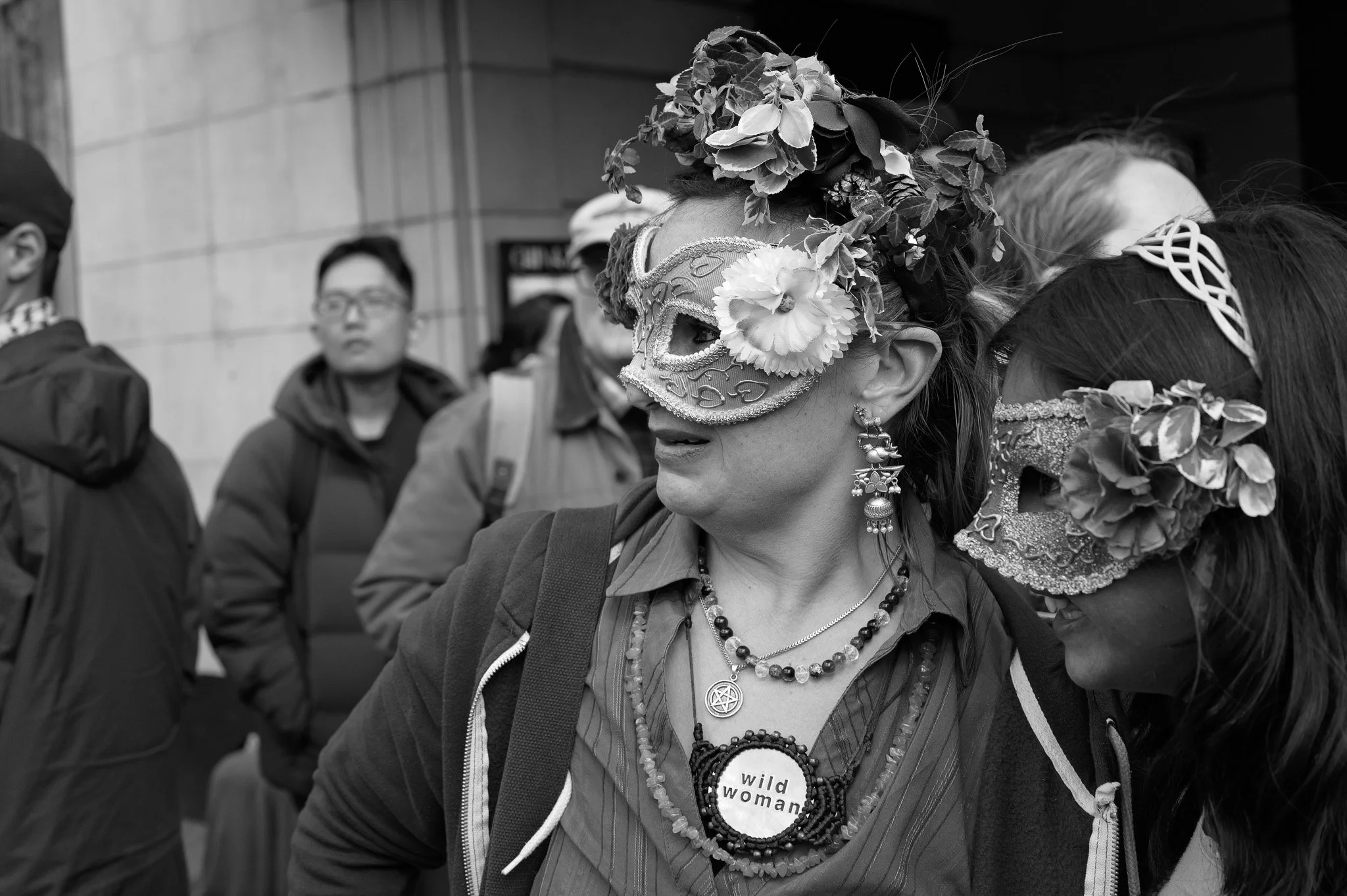
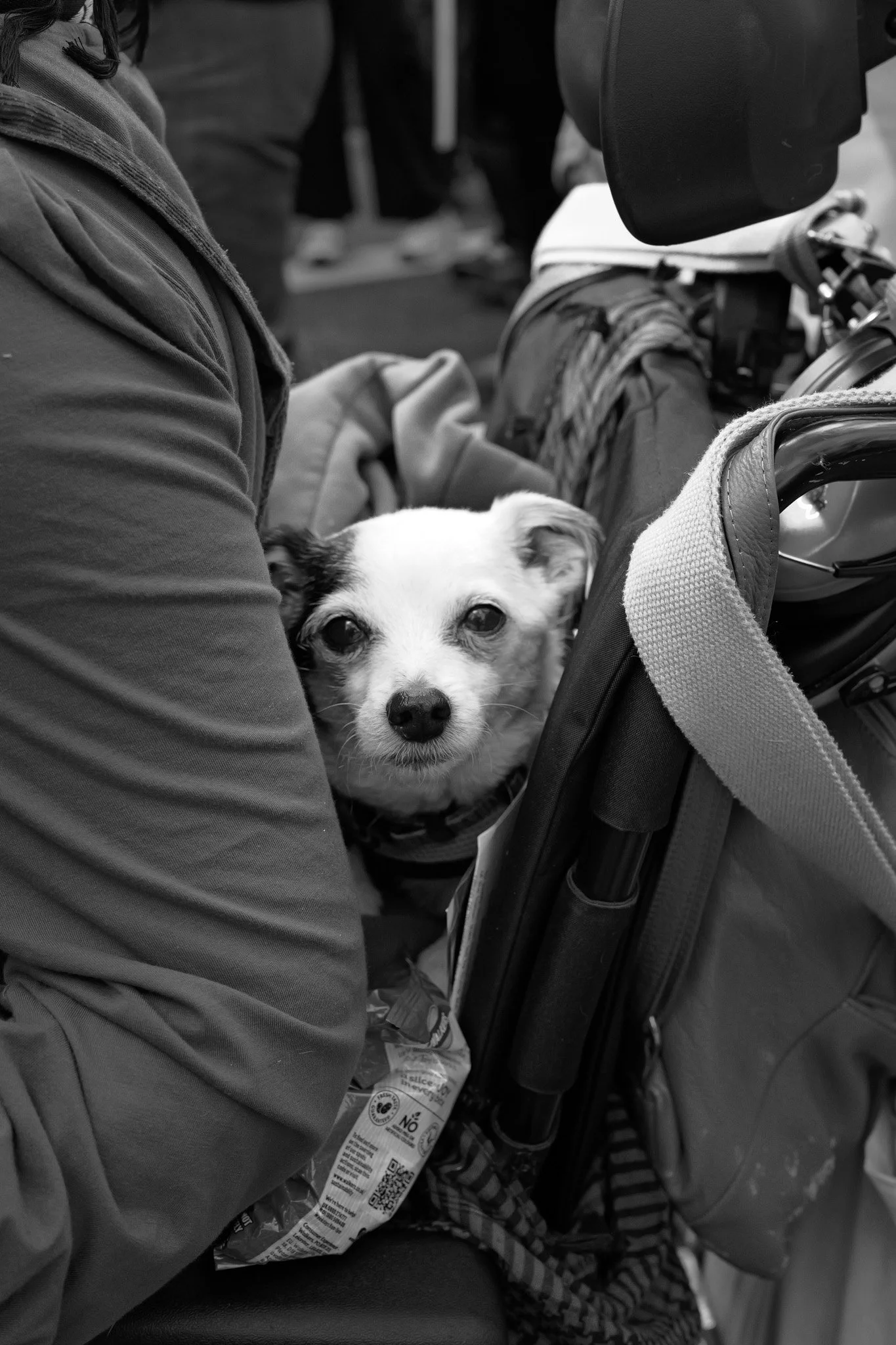
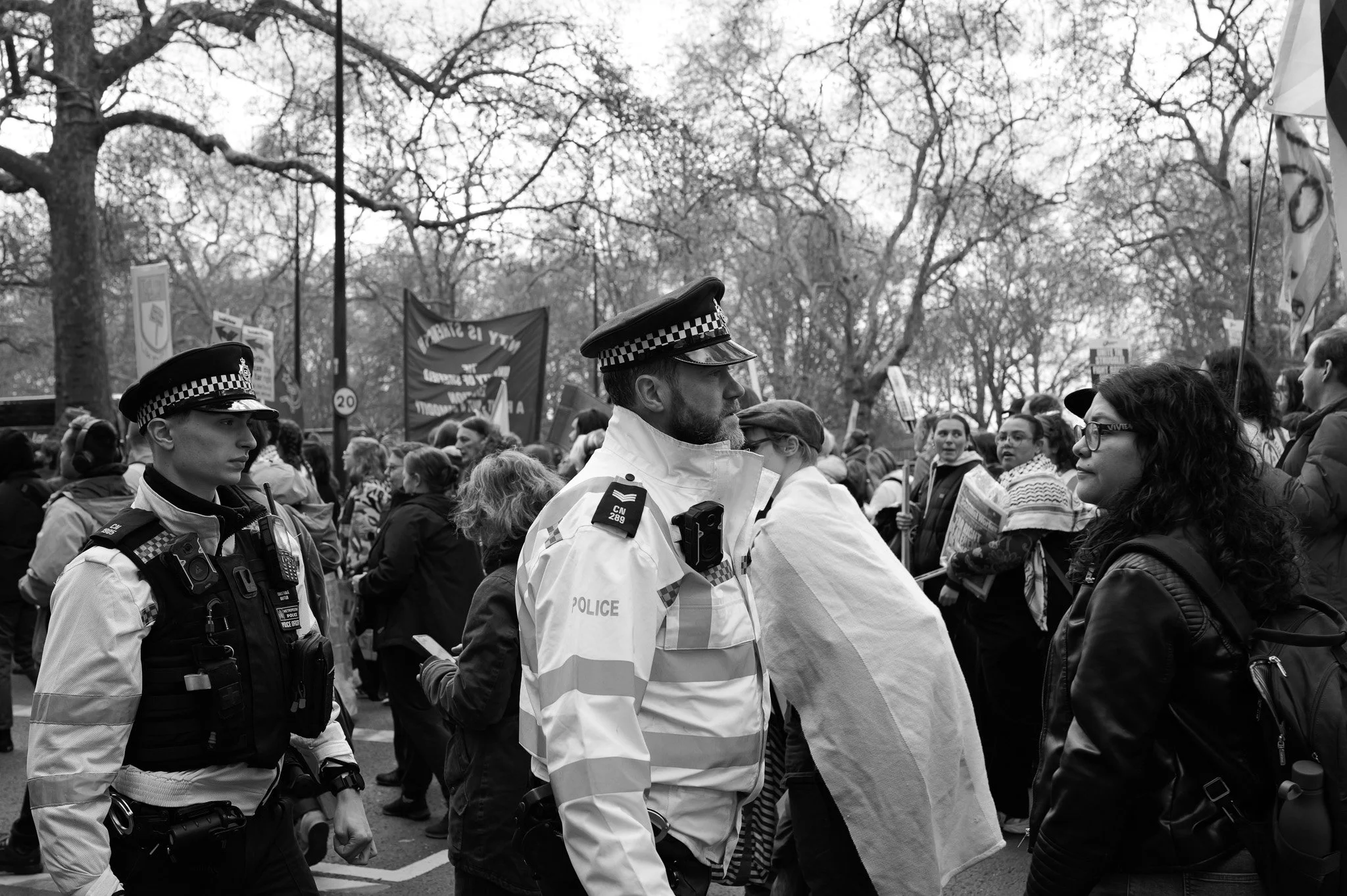
We were going to keep pounding the pavements around Oxford Street and Soho, but we decided to document the Together March was happening that day, as luckily for us, it was just around the corner on Park Lane. It turned out to be the perfect test for the cameras. A moving crowd, unpredictable subjects, and a bit of chaotic atmosphere.
It was a great situation for street, because it was so busy and there were other photographers about, the normal street nerves I get early on disappeared and I felt I could be bolder in getting the shots that I wanted.
I was wearing all black like I usually do for street shooting, trying not to draw attention to myself, and the Q3's form factor helped with that. It's dark and compact enough that most people didn't notice. A few did spot me, but it felt less conspicuous than a bigger camera with a chunky lens would have been. I was just shooting, bang bang bang, and the camera kept up without getting in the way.
Monochrome and the files
I tried Leica Standard and Leica Vivid before settling on Monochrome for the session. Why? Well, I've been shooting a lot of black and white recently because I think it works well for street. It strips out the distraction of colour and forces you to pay attention to the subject.
For example, I think the below illustrates this well. I feel that the background with the signs and colours of the people behind the subject are somewhat distracting.
Leica Q3 43. Note the colour version of image on the right has a Portra like profile applied, a this is what I have been using for most my colour street work recently.
The Monochrome look coming out of the Q3 is rich. The blacks are deep, there's a natural contrast to the images, and I only had to do minor tweaks, mostly just nudging exposure and contrast.
I hate to admit it but I did prefer it to what I've been getting from the Fuji, though I want to go back and spend more time editing my Fuji raws before I commit to that.
Part of the comparison isn't fair either because I've had a black mist filter on my 23mm to get a more filmic look, and the Leica was giving me this super crisp, detailed rendering that I found myself really liking. That's actually one of the takeaways even if I don't buy the camera. I might dial back the film look for a while and experiment with cleaner images.
28 vs. 43
The 28 on the Q3 is a true 28 on full frame, while my 23mm on the Fuji is closer to 35mm equivalent because it's APS-C. So 28 is a tad wider than my go-to Fuji street lens but similar to my Fuji 18mm F1.4.
28 seems plenty wide for most situations, but I found myself wanting to crop in quite a lot for the shots I got with it.
The 43 felt more natural to me. It's often described as the focal length your eyes see, and from a documentary perspective for the march it was mostly a good fit. I spent most of my time in the crowd with the 43 and got most of my favourite shots from the day with it.
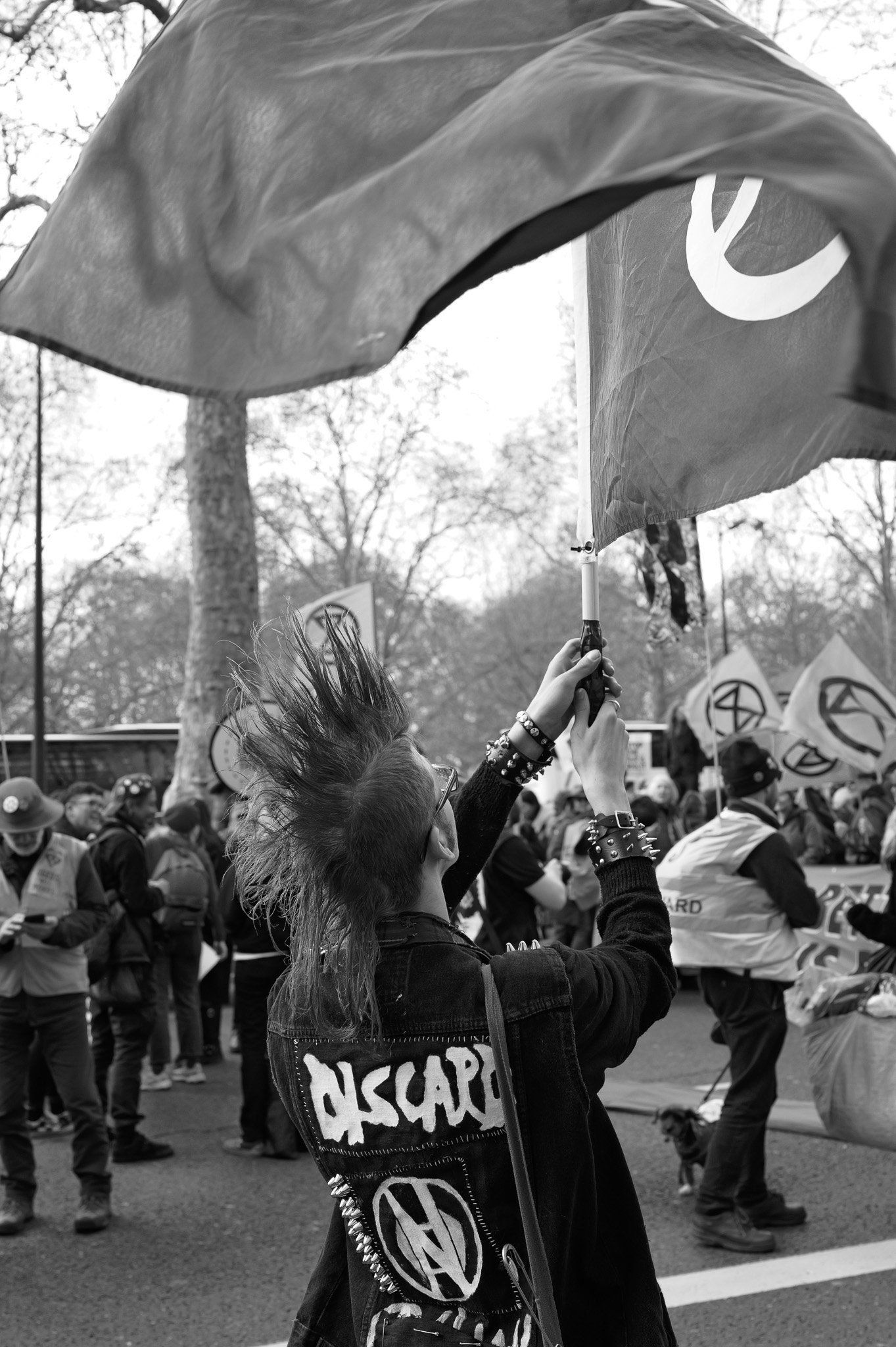
There were a few moments where I wished I had more width though. The punk waving the anarchist flag, for example. I couldn't get the whole flag in the frame and I couldn't step back because it was too crowded. With the 28 I'd have got the framing I was after.
The crop-ability on these files though gives you a huge amount of versatility. The lens is sharp and you've got 60 megapixels to work with, so you can crop in hard and still keep the detail.
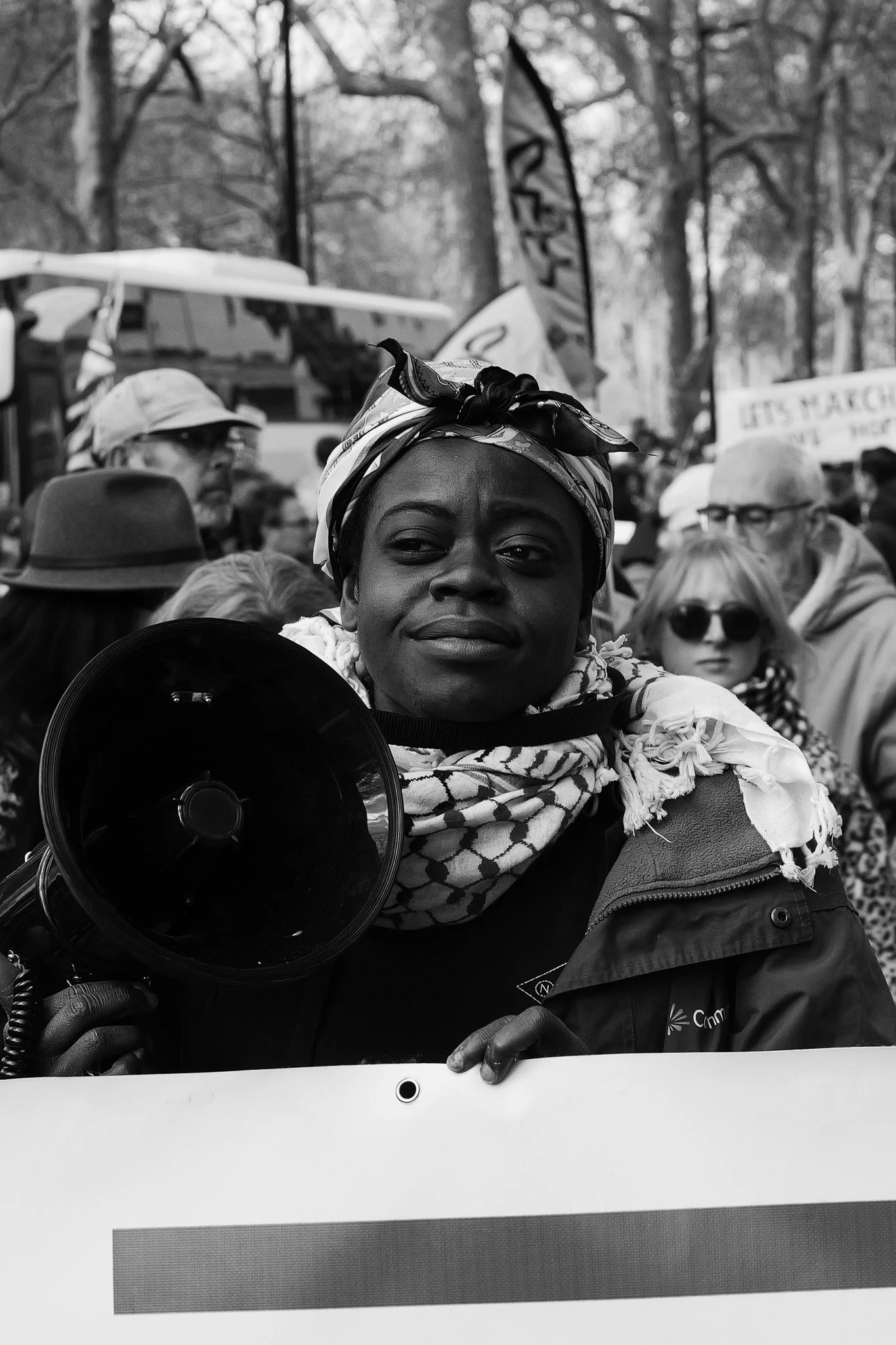
Take the woman with the megaphone, shot with the 43mm for instance. She looked really calm and content just standing there waiting for things to start. For this shot, I was able to significantly punch in and had a lot of latitude with the framing.
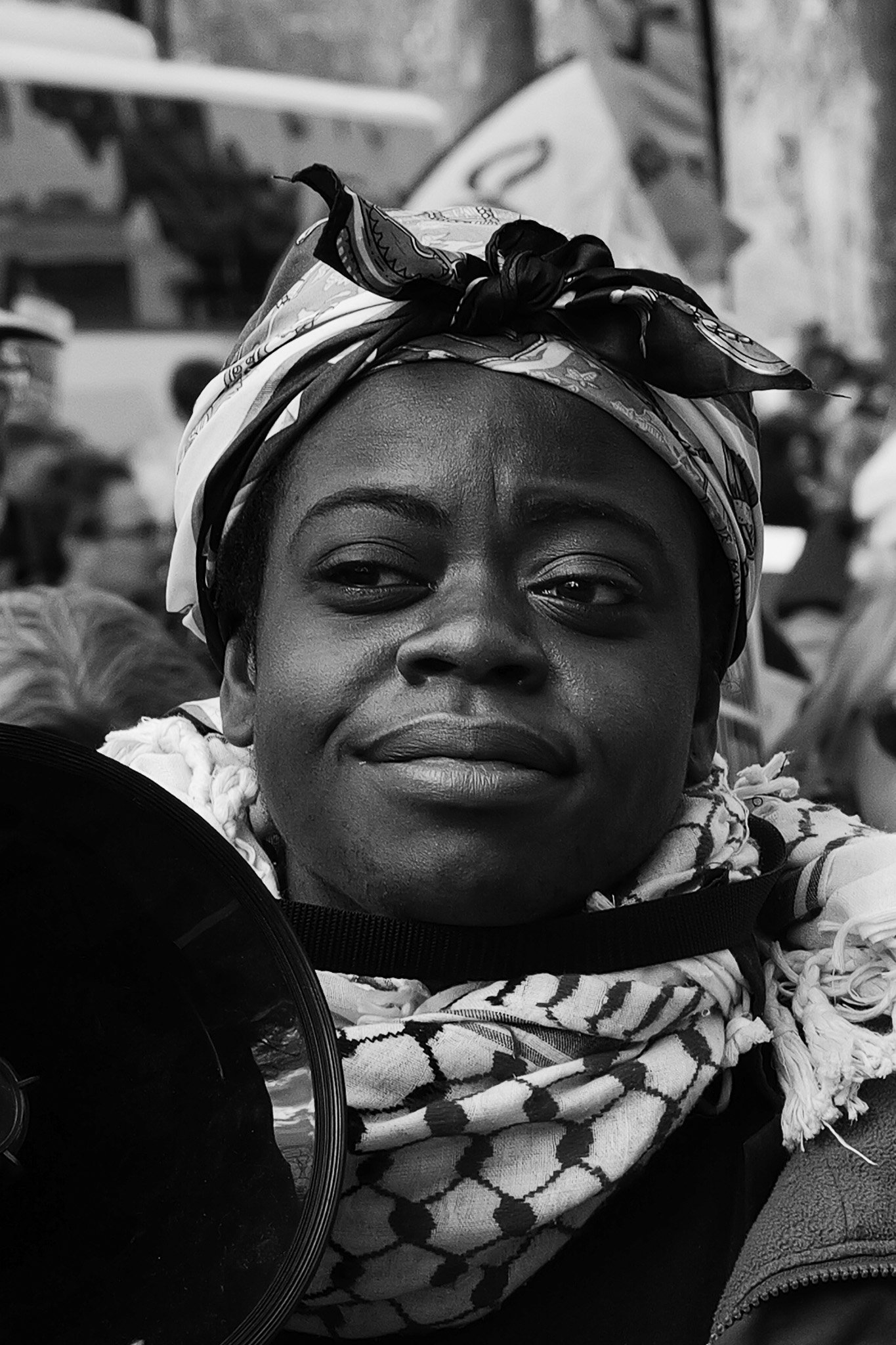
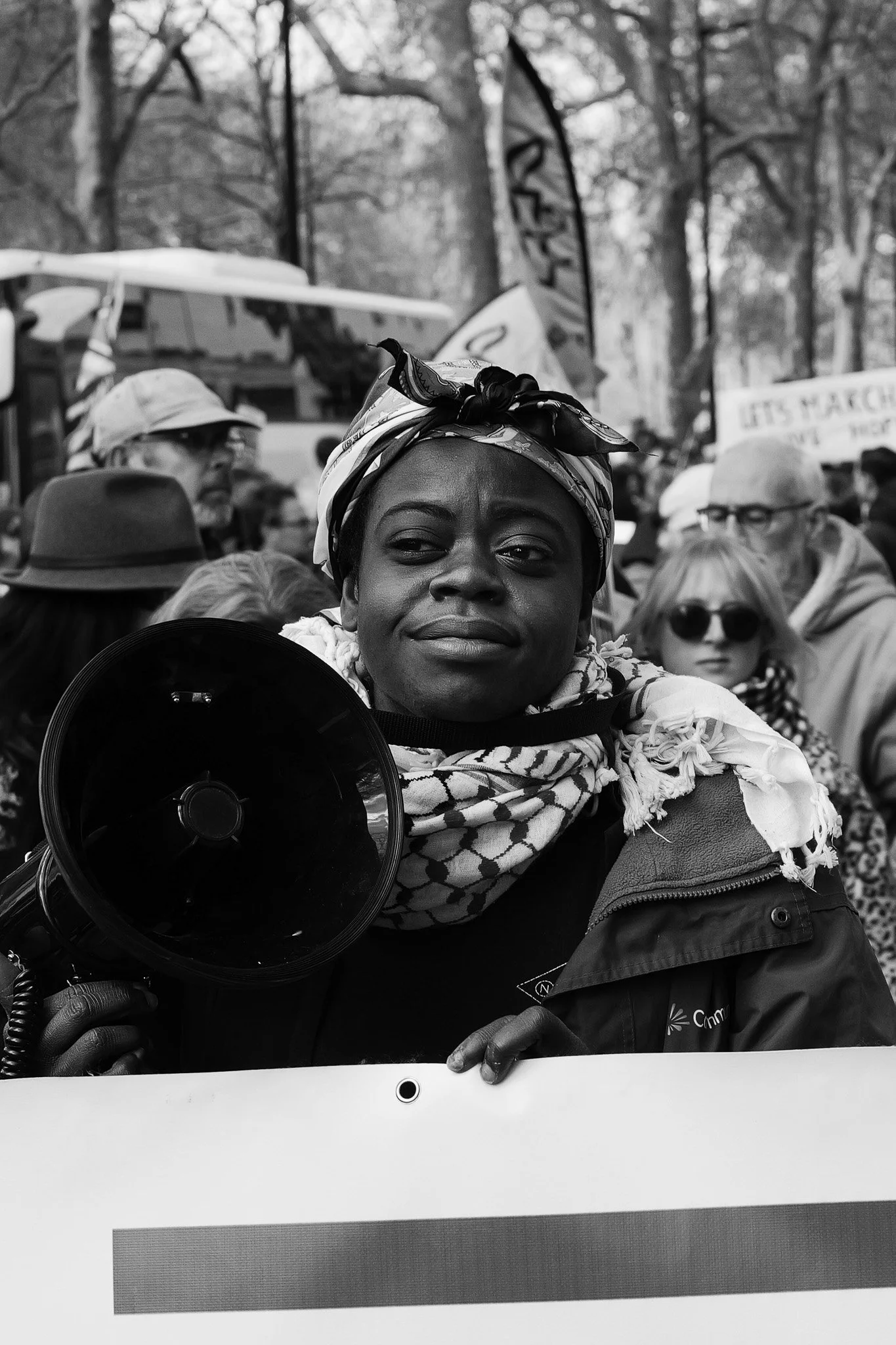
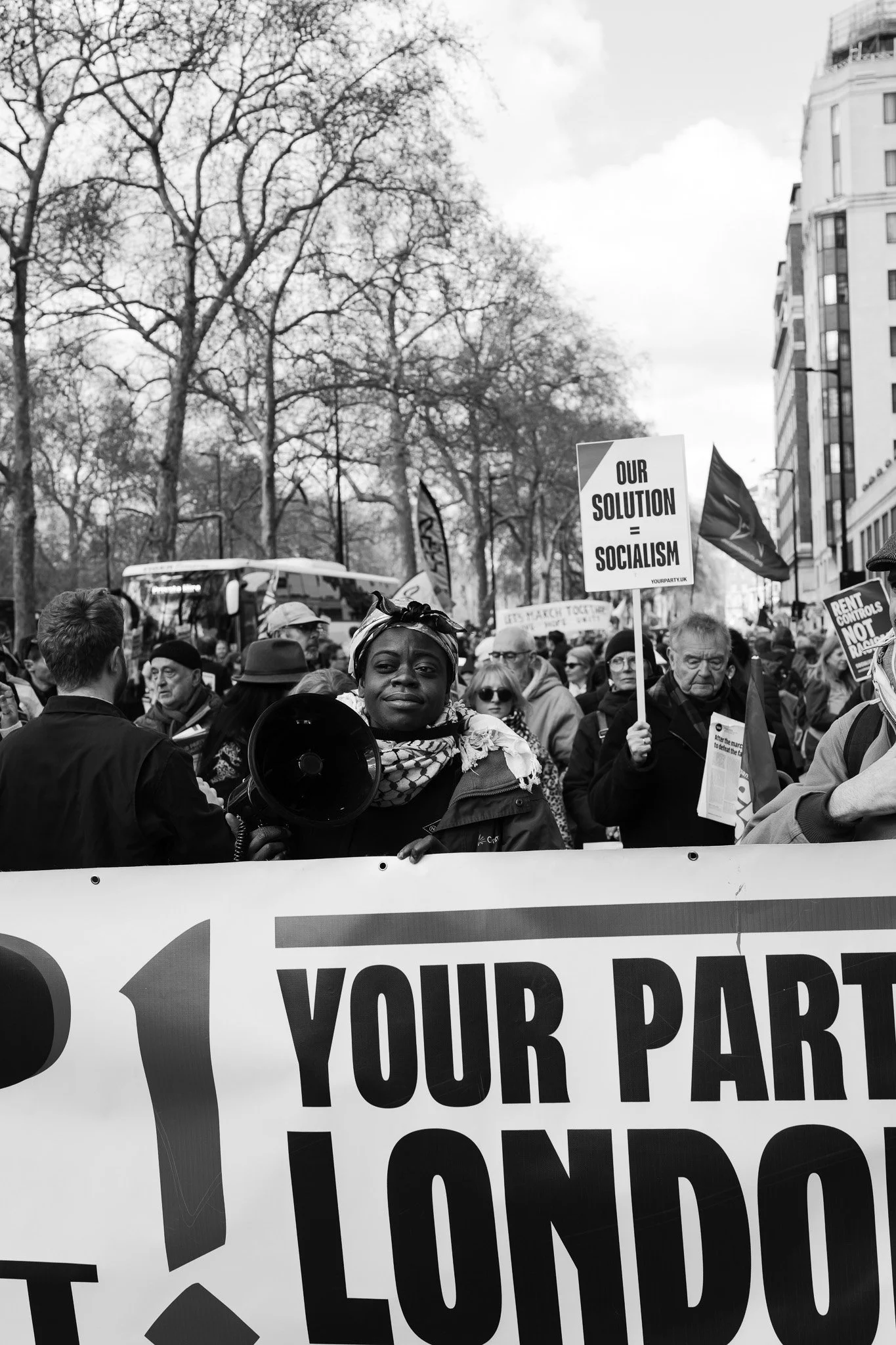
There was one thing that frustrated me. On the Fuji, I've mapped the digital zoom to my d-pad. Press once, it zooms in a bit. Press again, it zooms in further. It's like shooting at a longer focal length in-camera. On the Q3, you only get crop frame lines overlaid on the viewfinder.
You can see where the crop would be, but you're still composing the full frame. There's a focus check that zooms in but it jumps back out. So I ended up composing more in post than in-camera, which isn't necessarily a problem but it does mean I could end up being less intentional with framing in the moment. With the 28 especially, I there's a risk you're just shooting wide and figuring it out later.
If I were buying one, I'd lean toward the 28. Partly because of the extra room, partly because I shoot gig photography and a wider lens is better for getting the whole band in. You can always crop in. You can't crop out. And given how much these files can handle cropping, the 28 feels like the more versatile choice. But my favourite images from the day are on the 43, so that presents a real dilemma!
The verdict
Matt came away from it ready to buy one. He's looking out for a lightly used 28mm because it gives you a bit more flexibility.
My reaction was slower. In the moment, it wasn't a hell yeah. But looking back at the files afterwards, that creeping desire to buy one has started to build.
Is it worth the hype? I think so. The files are great, the build is on another level compared to my Fuji XT5, and it was a genuinely nice experience to shoot with once I accepted the lack of dials. But it wasn't “life-changing” in the way some YouTubers make it sound.
To buy either of these new you’re looking at around £5,500 - £6,000, and around £3,500 - £4,500 second hand. Add another battery, that’s £150 (more than double a new XT5 battery). It's a lot for a fixed-lens camera.
My head says I should invest that money in a second Fuji body and fill some lens gaps, especially as I'm aiming to do more paid work and having to rent gear less would be a smarter choice.
My heart says I'd buy a Q3 tomorrow if I could. The depth in those images, the colours, the experience shooting made it a joy (although I’d need to settle this 28 vs 43 dilemma).
I think the honest answer is that I can take great photos with the gear I've got. The Q3 is something to work towards. In the near future I hope I’ll have a ‘treat yo self’ moment. But for now, the wiser move is to invest in what I already have.
👉 If you have the cash to drop I would 100% buy one.
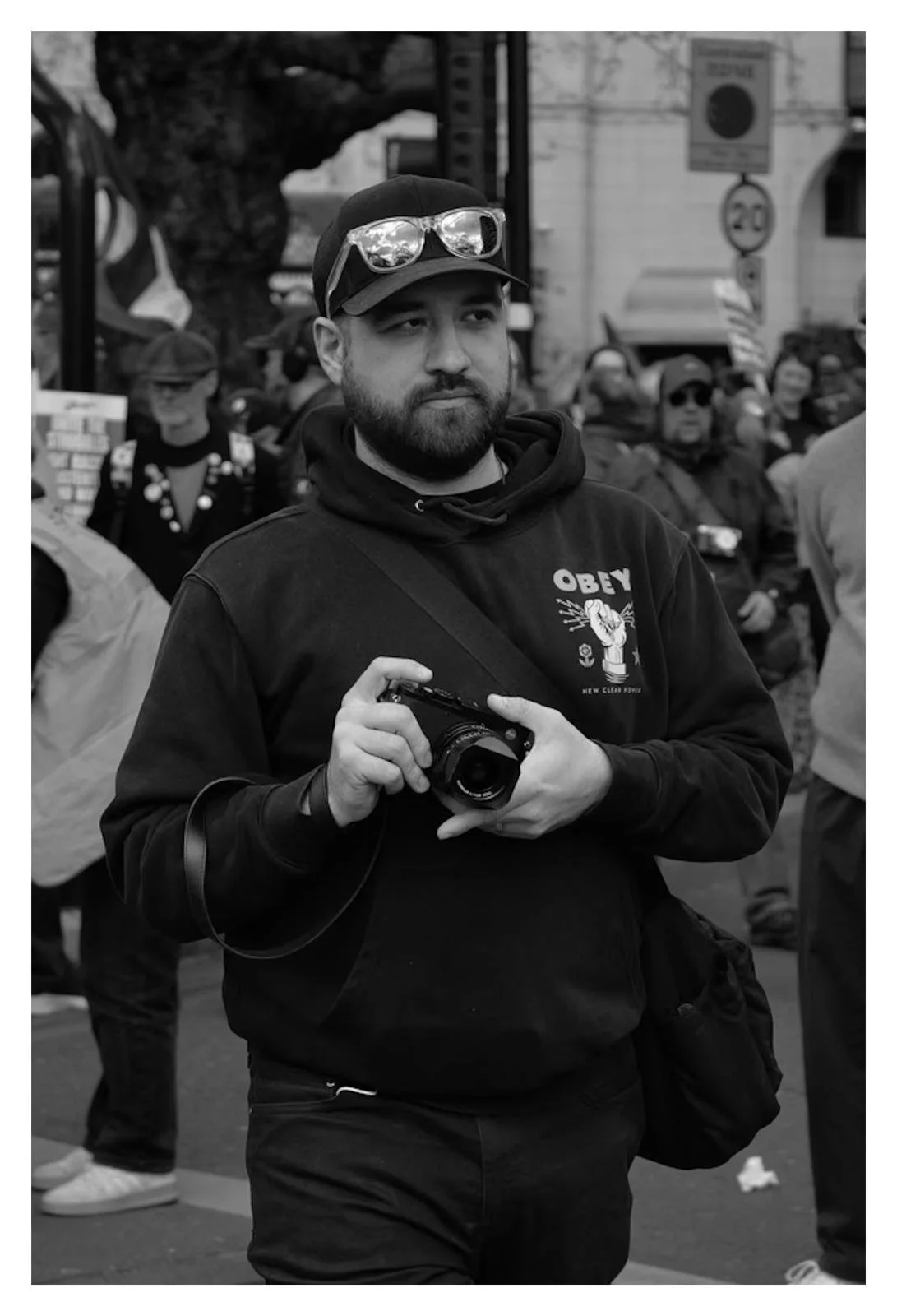
P.S. Here’s a snap Matt got me with one… Personally I think I look right at home with one!